Rockin Robin SongFlying The Web For News.
RobinPost Logo Amazon Prime Deals


Global World Topics

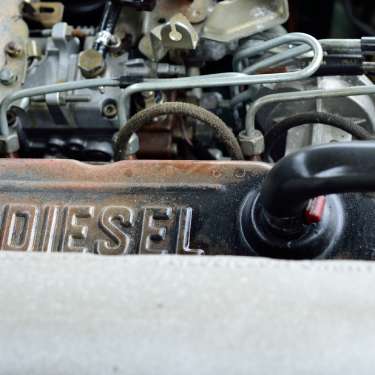
A Quick Guide to Diesel Engine Maintenance

Diesel engines have more benefits than drawbacks, but they can only keep delivering on them if you keep up with maintenance. You should leave most major changes and repairs to an experienced mechanic, but for the most part, looking after your diesel engine is easy. Here’s a quick guide to diesel engine maintenance to keep your vehicle running smoothly for years to come.

Perform Regular Oil Changes

If you want to ruin an engine, neglect oil and oil filter changes. So stay on top of these tasks, especially because diesel engines generate more soot and particulates than gasoline engines. This leads to more grit and grime in the engine, impeded performance, and eventual engine failure. Follow your manufacturer’s recommendations in the owner’s manual about the best type of oil to choose and how often you should change it to ensure optimal performance.

Monitor Coolant Levels

Coolant is vital—it prevents your engine from overheating, which leads to poor performance and eventual engine failure. Periodically check your coolant levels and top the fluid off as needed. Once in a while, flush the radiator and replace the coolant according to schedule. Again, your owner’s manual or mechanic should know how often to do this. This practice prevents corrosion and keeps the cooling system functioning well.

Replace Fuel Filters

First, buy only the best diesel fuel from a reputable dealer. Diesel engines rely on clean and pure diesel fuel to run smoothly. Contaminants lead to clogs that damage the engine.

Additionally, stay on top of fuel system maintenance and replace the fuel filters as necessary. Most diesel engines have two fuel filters—a primary and a secondary. Check and replace them periodically.

Inspect the Air Filter

Your engine needs to breathe just as much as you do. Make sure it’s breathing only clean air by staying on top of air filter replacement. A clean air filter maintains the right air-to-fuel ratio in your engine. Conversely, dirty air filters restrict airflow, reducing engine efficiency and performance. Inspect your air filter regularly and replace it when it becomes dirty or clogged.

Eye the Exhaust System

Diesel engines produce more exhaust than gas engines, which leads to soot and particulate buildup in the exhaust system and creates back pressure. Regularly inspect the system for leaks, damage, or excessive soot buildup. Keeping the exhaust system clean, once again, maintains engine efficiency and reduces harmful emissions.

You might also consider installing a performance exhaust system, which is one of the best diesel upgrades on a budget and will further alleviate back pressure. This upgrade will also sustain your engine even better between scheduled maintenance.

Maintain the Battery

Diesel engines require more power to start, especially in cold weather. Keep your battery in good stead by periodically checking the connections, cleaning any corrosion, and testing the charge. Replace the battery if it shows signs of weakness or age.

That’s a quick guide to diesel engine maintenance. Maintaining your diesel engine doesn’t have to be complicated. By following these simple steps, you can ensure your engine stays in top condition.


Bio: Casey is a passionate copyeditor highly motivated to provide compelling SEO content in the digital marketing space. Her expertise includes a vast range of industries from highly technical, consumer, and lifestyle-based, with an emphasis on attention to detail and readability.


More News From This Category
How Students Can Stay Focused In Hybrid Learning Settings
Fri, 08 May 2026 14:15:42 +0000

Person sits cross-legged on grass using laptop in park, surrounded by trees and yellow fallen leaves.

Switching between in-person classes and online sessions can throw off your rhythm. One day feels structured, while the next feels less predictable. That shift makes it harder to stay locked in.

Read More ...


What US Midterm Election Results Really Show
Fri, 08 May 2026 07:08:32 +0000

Election night rarely ends when the maps stop flashing. The real story in us midterm election results usually appears in the gaps between expectations and outcomes - where turnout changed, where suburban districts swung back, where independent voters broke late, and where control of Congress came down to a handful of races instead of a single national wave.

For readers tracking politics across multiple updates, video coverage, and breaking alerts, that matters more than any one dramatic headline. Midterms are often framed as a verdict on a sitting president, but they are also a test of local candidates, economic anxiety, redistricting, abortion rights, voter enthusiasm, and the difference between national polling and district-level reality. That is why the same election can produce one broad narrative on cable news and a more complicated one in the actual vote count.


What US Midterm Election Results Really Show

Why us midterm election results matter beyond one night

Midterm elections decide every seat in the House of Representatives, about one-third of the Senate, and a wide range of governor, secretary of state, attorney general, and state legislative races. In practical terms, that means us midterm election results shape whether a president can move legislation, whether Congress becomes a brake on the White House, and how states manage election rules, abortion policy, education fights, crime policy, and voting access.

For most voters, the immediate question is simple: who won control? That is important, but it is only the first layer. A narrow House majority works differently from a commanding one. A Senate majority with a slim margin can still struggle if members of the same party disagree on spending, judicial nominees, border policy, or foreign aid. Results at the state level can also have long tails, especially when they affect ballot access, election certification, and redistricting ahead of the next presidential cycle.

This is where broad election coverage can mislead casual readers. A party can underperform in marquee governor races but still gain enough House seats to control the chamber. Another can lose the House but post stronger-than-expected Senate results because candidate quality mattered more in statewide contests. The map is one event, but it contains several different elections happening at once.

The biggest patterns behind recent US midterm election results

One of the clearest patterns in modern midterms is split behavior. Voters do not always cast a straight-ticket ballot with the same intensity they once did, but they also do not split their votes randomly. They may punish the president's party on inflation while backing a Senate candidate from that same party because they distrust the alternative. They may vote for a Republican governor and a Democratic House member in the same state if local issues pull them in different directions.

Turnout is another major factor. Midterms historically draw fewer voters than presidential years, which means coalition strength matters as much as broad popularity. A party with highly motivated voters in key suburbs or rural counties can outperform national polls. Younger voters can change the shape of a race, but only if they actually show up in strong enough numbers. Older voters remain highly reliable, which gives them outsized influence in many battlegrounds.

Candidate quality keeps showing up as a deciding force. In some cycles, parties have recruited disciplined, locally credible candidates who fit their states or districts well. In others, they have backed nominees with weak campaign skills, controversy baggage, or messages that worked in primaries but collapsed in general elections. That is one reason election analysts look beyond party labels and ask whether a Senate candidate can survive in a purple state or whether a House contender can match the district's education and income profile.

Then there is the issue mix. Economic frustration has often driven the midterm mood, but it does not operate alone. Abortion rights, crime, immigration, threats to democracy, foreign policy, and school debates can all rise quickly depending on court rulings, local conditions, and campaign messaging. It depends on what voters see as most urgent in the closing weeks.

Reading House and Senate results the right way

The House is usually where national mood shows up fastest. Every district is on the ballot, and a relatively small shift in suburban and exurban voting can flip dozens of seats. When us midterm election results produce a narrow House majority, it often signals a frustrated electorate without a full rejection of the president's party. When the majority is large, that usually points to a broader wave with more uniform movement across regions.

The Senate tells a different story because each race is statewide and the map changes every cycle. A party can win the national House vote and still struggle in the Senate if it is defending difficult seats in competitive states. The reverse can also happen. Senate results often reveal where message discipline, incumbency, and candidate image carried more weight than the national environment.

This is why analysts who focus only on one chamber can miss the larger picture. If the House shifts but the Senate resists, voters may be asking for divided government rather than one-party rule. If both chambers move in the same direction, the result carries more force as a national signal.

What close races really tell us

Close races are not noise. They are often the clearest evidence of where the electorate is unsettled. A district decided by one or two points may point to a demographic transition, redistricting effects, or a local backlash that could intensify in the next cycle. In a country this polarized, small movement matters.

That is especially true in suburbs around major metro areas. These regions have become central to modern election math because they can swing between parties based on education levels, cultural issues, and economic confidence. When suburban counties move, House control usually follows.

Why expectations matter so much on election night

Midterm coverage is shaped as much by expectations as by raw results. If forecasts suggest a major opposition wave and it never arrives, the president's party may still lose seats but be treated as having survived. If expectations are low and one party posts narrow gains, those gains can look bigger than they really are.

This matters for public perception, donor energy, and the next campaign cycle. Narrative can affect whether party leaders keep the same strategy, whether presidential hopefuls enter the race, and whether activists feel encouraged or demoralized. Election results are numbers first, but politics digests them through storylines.

A useful way to read the returns is to ask three questions. Did one party beat the structural pattern for midterms? Did key battleground voters reject candidates seen as too extreme? And were the winning coalitions broad or just barely enough? Those answers usually tell you more than the first big map graphic.

State races often shape the next national contest

Governors and secretaries of state do not always get the same attention as Senate races, but they can be just as important. Governors influence abortion access, education policy, emergency powers, infrastructure spending, and state budgeting. Secretaries of state can shape election administration, certification processes, and public trust in how votes are counted.

State legislative races matter too, especially after redistricting fights and legal battles over voting rules. A party that falls short nationally may still build long-term power by winning statehouses, while a party that dominates headlines in Washington can lose ground where future electoral maps are drawn.

For a platform built around fast discovery and broad news access, this is the part readers should not skip. The headline battle for Congress draws the clicks, but the deeper policy impact often sits in the state results just below it.

What to watch after the results are in

The election is not over when the winners give speeches. The next phase is about governing. If control is narrow, expect leadership fights, committee battles, spending showdowns, and more pressure on moderates from both parties. If one party controls less than expected, internal blame usually starts quickly - messaging, money, candidate recruitment, abortion, inflation, turnout strategy, all of it.

Watch where each party claims a mandate and where it avoids one. That difference tells you what legislation is realistic. It also reveals which voter groups leaders believe delivered the win: suburban women, working-class voters, younger voters, independents, or rural conservatives.

The other smart thing to watch is whether results confirm a durable shift or a temporary correction. Some midterms mark the start of a new alignment. Others are more like a warning shot tied to a single moment of public frustration. The distinction only becomes clear when parties respond.

For anyone following the nonstop stream of election coverage, the best reading of us midterm election results is usually the least dramatic one at first glance. Look past the map colors, check where margins tightened or widened, and pay attention to the state-level picture. That is where the next chapter usually starts.

Read More ...


Creating a Temporary Living Space During Home Projects
Thu, 07 May 2026 14:10:51 +0000

Cozy hotel room with neatly made bed, wooden accents, large window with sheer curtains, and green suitcase on floor.

Home renovations bring improvements, but they also disrupt daily routines. Dust, noise, and limited access to rooms can make normal living difficult. That’s why creating a temporary living space during home projects helps maintain comfort and order while work continues.

Read More ...


Electric vs Gas Cars: Which Makes Sense?
Thu, 07 May 2026 07:08:26 +0000

The real question in electric vs gas cars is not which one wins on paper. It is which one fits the way you actually drive, pay for fuel, handle maintenance, and plan around daily life. A commuter with home charging, a rideshare driver logging long highway miles, and a family in an apartment building may all land on different answers for perfectly practical reasons.

That is why the debate keeps shifting. Gas cars still dominate the road, filling stations are everywhere, and buyers know what ownership looks like. Electric vehicles, meanwhile, are moving from early-adopter territory into the mainstream, pushed by lower running costs, new model choices, improving charging networks, and tougher emissions goals. For many drivers, the decision is no longer about curiosity. It is about timing, budget, and convenience.


Electric vs Gas Cars: Which Makes Sense?

Electric vs gas cars starts with your routine

If you leave home every morning, drive 25 to 40 miles, and return to a place where you can charge overnight, an electric car can feel easy very quickly. That daily rhythm removes the biggest concern most shoppers have, which is charging. You are not hunting for a public charger every few days. You are topping up at home and starting each morning with a near-full battery.

Gas cars still hold the advantage for people whose schedules are less predictable. If you cover large distances without much warning, drive into rural areas often, or cannot reliably charge where you live, gasoline remains simpler. Five minutes at the pump is still hard to beat when flexibility matters more than efficiency.

This is where buyers can get tripped up by broad claims. A vehicle can be cheaper to operate, cleaner in city driving, and quieter on the road, yet still be the wrong fit if your housing setup makes charging a hassle. The most useful comparison is not abstract. It is based on your zip code, your mileage, and your parking situation.

Cost is more complicated than the window sticker

One of the biggest points in electric vs gas cars is purchase price. In many segments, EVs still cost more upfront than comparable gas models. That gap can shrink with incentives, lease deals, and falling battery costs, but shoppers still notice the sticker first.

The next layer is operating cost. Electricity is often cheaper than gasoline on a per-mile basis, especially if you charge at home and local utility rates are reasonable. EVs also have fewer moving parts, no oil changes, and generally less routine maintenance. Over time, that can offset part of the higher purchase price.

But savings are not automatic. Insurance can be higher on some electric models. Public fast charging can cost far more than home charging. Tire wear may increase because EVs are heavier and deliver instant torque. If battery replacement is ever needed outside warranty coverage, that can become a major expense, though for many owners this remains a long-term concern rather than an immediate one.

Gas cars bring a more familiar ownership model. Repairs are widely understood, mechanics are easy to find, and used inventory remains broad across price points. For budget-minded shoppers, especially in the used market, gas often still offers more choices with lower entry costs.

Range matters, but charging matters more

Range grabs headlines because it is easy to compare numbers. One EV might offer 250 miles, another 320, while a gas car can often travel 400 miles or more before refueling. Those figures matter, but in practice the bigger issue is how fast and how easily you can refill.

For daily drivers, EV range anxiety can fade once charging becomes routine. A car with 250 miles of range is more than enough for many households. Problems show up on road trips, in cold weather, or when charging stations are busy, broken, or poorly placed.

Gasoline remains the more resilient system for long-distance travel. Stations are common, fueling is quick, and route planning is minimal. Electric road trips are improving, but they still ask more from the driver. You may need to plan stops around charger availability, battery preconditioning, weather, and wait times.

That does not mean EV travel is impractical. It means convenience varies sharply by region. In some metro corridors, charging is easy and getting easier. In other areas, it can still feel patchy. That gap matters more than advertised range alone.

Performance and driving feel are different by design

Many first-time EV drivers notice the same thing within minutes: electric cars feel quick. Instant torque gives strong acceleration from a stop, and the cabin is usually quieter than a gas vehicle. Around town, that makes an EV feel smooth, calm, and modern.

Gas cars still offer a driving experience many people prefer, especially enthusiasts or buyers who value engine sound, lighter vehicle weight, and familiar refueling patterns. They also tend to perform more consistently in settings where charging access is uncertain or towing demands are heavy.

Weather can affect both types, but electric models are more sensitive to temperature extremes. Cold weather can reduce range, and very hot conditions can influence battery management. Gas cars are not immune to seasonal issues, yet their range and refueling patterns tend to change less dramatically.

Maintenance, repairs, and long-term ownership

Electric vehicles generally win the maintenance conversation in routine use. No oil changes, no spark plugs, fewer fluids, and less brake wear thanks to regenerative braking all help reduce service visits. For people who want fewer moving parts and less scheduled maintenance, that is a real benefit.

Long-term repair questions are where the picture gets less tidy. Battery durability has improved, and most automakers offer substantial battery warranties, but replacement costs remain a concern in the public mind. Repair networks for EV-specific issues are growing, though they are still less mature than the infrastructure around gas vehicles.

Gas cars ask for more regular maintenance, but the system around them is deeply established. Independent repair shops are everywhere. Parts are widely available. Used buyers and second owners often feel more confident because the technology is familiar and easier to price.

For drivers who keep a car for a very long time, both paths involve trade-offs. An EV may save money along the way but raise uncertainty around battery aging and resale. A gas car may cost more in fuel and service over the years but remain easier to repair almost anywhere.

Environmental impact is real, but not identical in every state

A lot of the public conversation around electric vs gas cars centers on emissions, and for good reason. EVs produce no tailpipe emissions, which is especially valuable in dense urban areas with air-quality concerns. They are also generally cleaner to operate over time, even when accounting for electricity generation and battery production.

Still, the climate benefit is not identical everywhere. An EV charged on a cleaner power grid has a stronger emissions advantage than one charged in a region still heavily dependent on fossil fuels. Battery manufacturing also carries a significant environmental footprint upfront.

Gas cars are straightforward in this respect. They burn fuel and emit carbon directly every time they are driven. Efficiency gains help, and hybrids improve the picture, but gasoline ownership remains tied to ongoing tailpipe emissions.

For many buyers, the environmental question is not all or nothing. It is one factor among many. Some will prioritize lower emissions even if charging takes planning. Others will choose the vehicle that best matches their current housing or budget and revisit the issue later.

Who should seriously consider each option

Electric vehicles make the most sense for drivers with predictable daily mileage, access to home charging, and a plan to keep fuel and maintenance costs low over time. They also fit buyers who want a quieter driving experience and are comfortable with route planning on longer trips.

Gas cars still make strong sense for people who rent, park on the street, travel long distances often, drive in areas with limited charging infrastructure, or need the lowest upfront cost in the used market. They also remain practical for households that want one vehicle to handle every possible scenario without charging logistics.

There is also a middle lane worth mentioning: hybrids and plug-in hybrids. For some shoppers, they answer the biggest pain points on both sides. A hybrid reduces fuel use without changing daily habits. A plug-in hybrid offers short electric commuting with gasoline backup for longer drives. Neither is a perfect substitute for a full EV, but both can be smart transition choices.

The most useful way to think about this market is not as a culture-war choice or a technology loyalty test. It is a transportation decision shaped by infrastructure, pricing, and routine. The right answer today may change in three years as charging expands, battery prices shift, and more used EVs enter the market.

If you are shopping now, ignore the loudest claims and start with your actual week: where you drive, where you park, what you spend on fuel, and how often you need flexibility on short notice. That is usually where the right car reveals itself.

Read More ...


Understanding the Dangers of Algae Growth in Hydroponics
Wed, 06 May 2026 14:07:37 +0000

Someone holding a hydroponic lettuce plant in a net pot with rows of growing plants blurred in the background.

Hydroponic systems offer a controlled way to grow plants, but they also create an environment where algae can thrive if growers do not manage conditions carefully. Understanding the dangers of algae growth in hydroponics is essential for maintaining plant health, preserving system efficiency, and avoiding long-term complications that can disrupt yields. Algae may appear harmless at first glance, yet it quickly becomes a persistent issue that interferes with nutrient balance, oxygen levels, and overall system stability.

Read More ...


Related Bing News Results
Today's Wordle Hints, Answer and Help for May 9, #1785
Fri, 08 May 2026 13:05:00 GMT
Here's today's Wordle answer, plus a look at spoiler-free hints and past solutions. These clues will help you solve The New York Times' popular puzzle game, Wordle, every day.

What is Trump's approval rating today? Here's what the polls say now
Fri, 08 May 2026 12:27:00 GMT
What is Donald Trump's approval rating today? Here's how Americans really feel about the president in the latest polls - ahead of the 2026 midterms.

Stock Market Today: Tech Shares, Strong Jobs Report Help S&P 500, Nasdaq Close at New Records, Post 6th Straight Week of Gains
Fri, 08 May 2026 09:26:00 GMT
Major stock indexes advanced Friday after the highly anticipated April employment report came in better than expected, with the S&P 500 and Nasdaq Composite hitting fresh all-time highs.

Stock Market Today (LIVE): AWS Heat Wave Stalls Coinbase, FanDuel; MercadoLibre Trades Margins for Growth
Fri, 08 May 2026 06:47:00 GMT
Top insights from the latest market news from Friday, May 8, from The Motley Fool analysts on Team Rule Breakers and Team Hidden Gems.

Closure of I-285 section starts today. Take these alternate routes
Fri, 08 May 2026 06:37:51 GMT
The shutdown of a section of I-285 in Atlanta is expected to cause chaos over the weekend. The closure begins Friday at 7 p.m.


Blow Us A Whistle


Related Product Search/Búsqueda de productos relacionados

Amazon Logo

Visit Our New Print-On-Demand Stores On Printify and Zazzle
Printify Zazzle